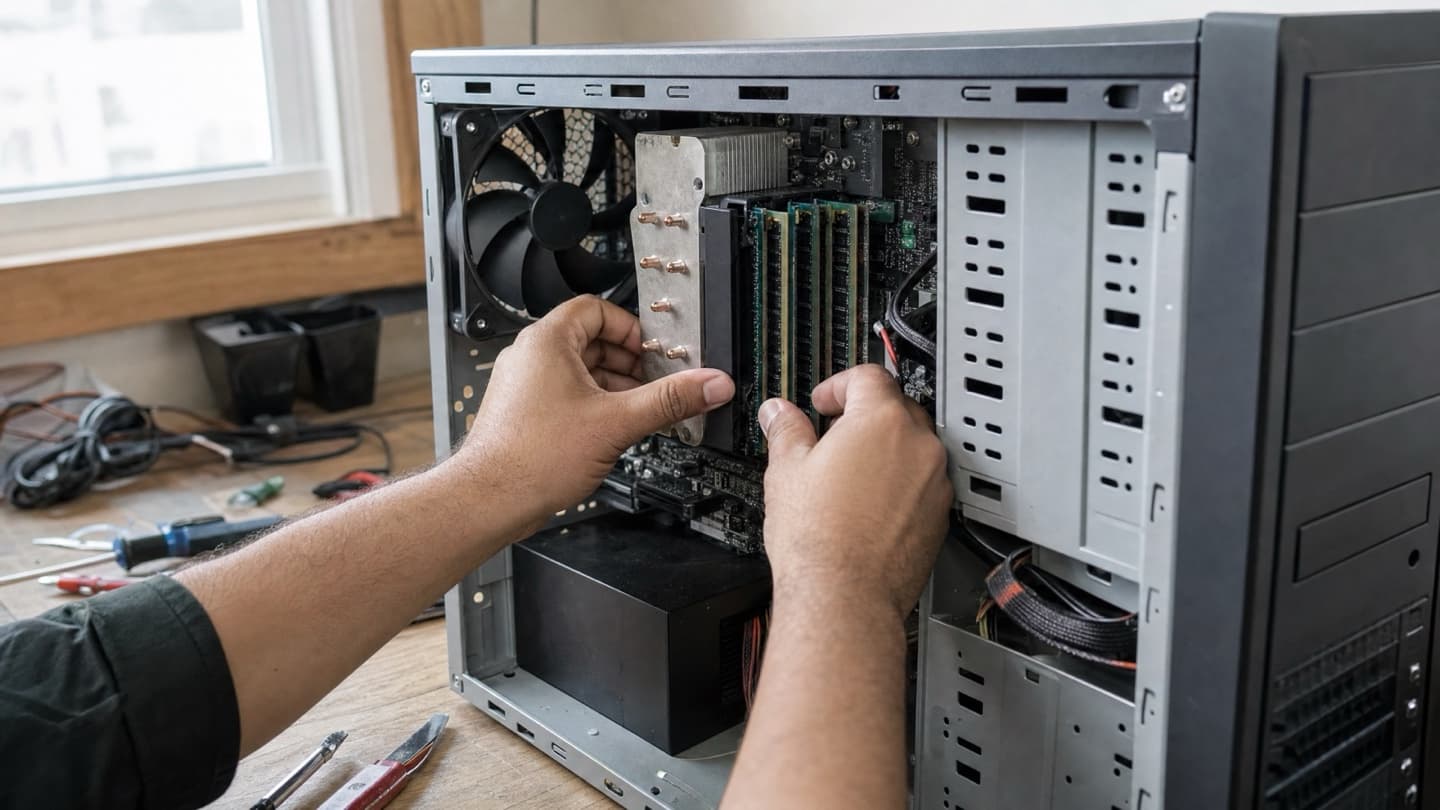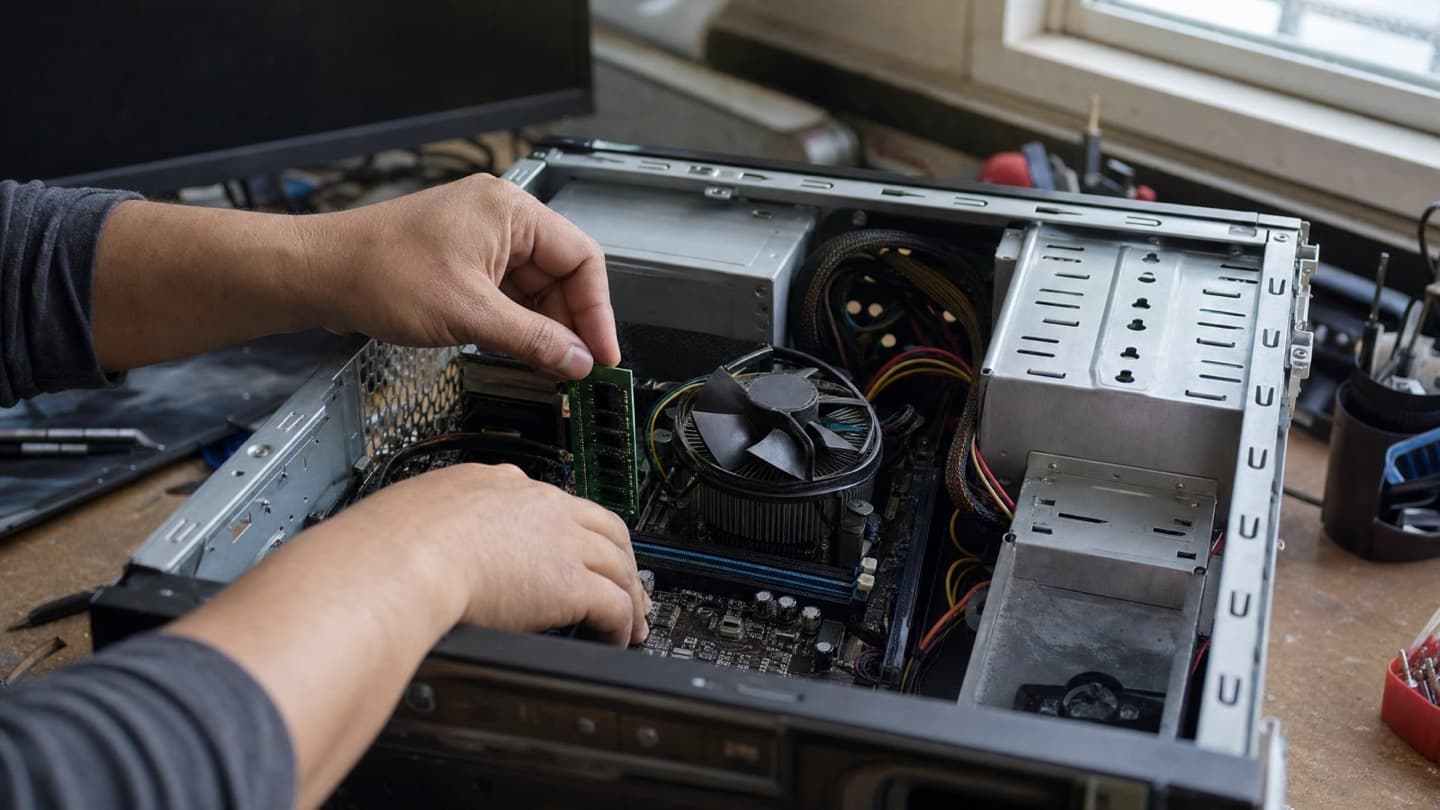
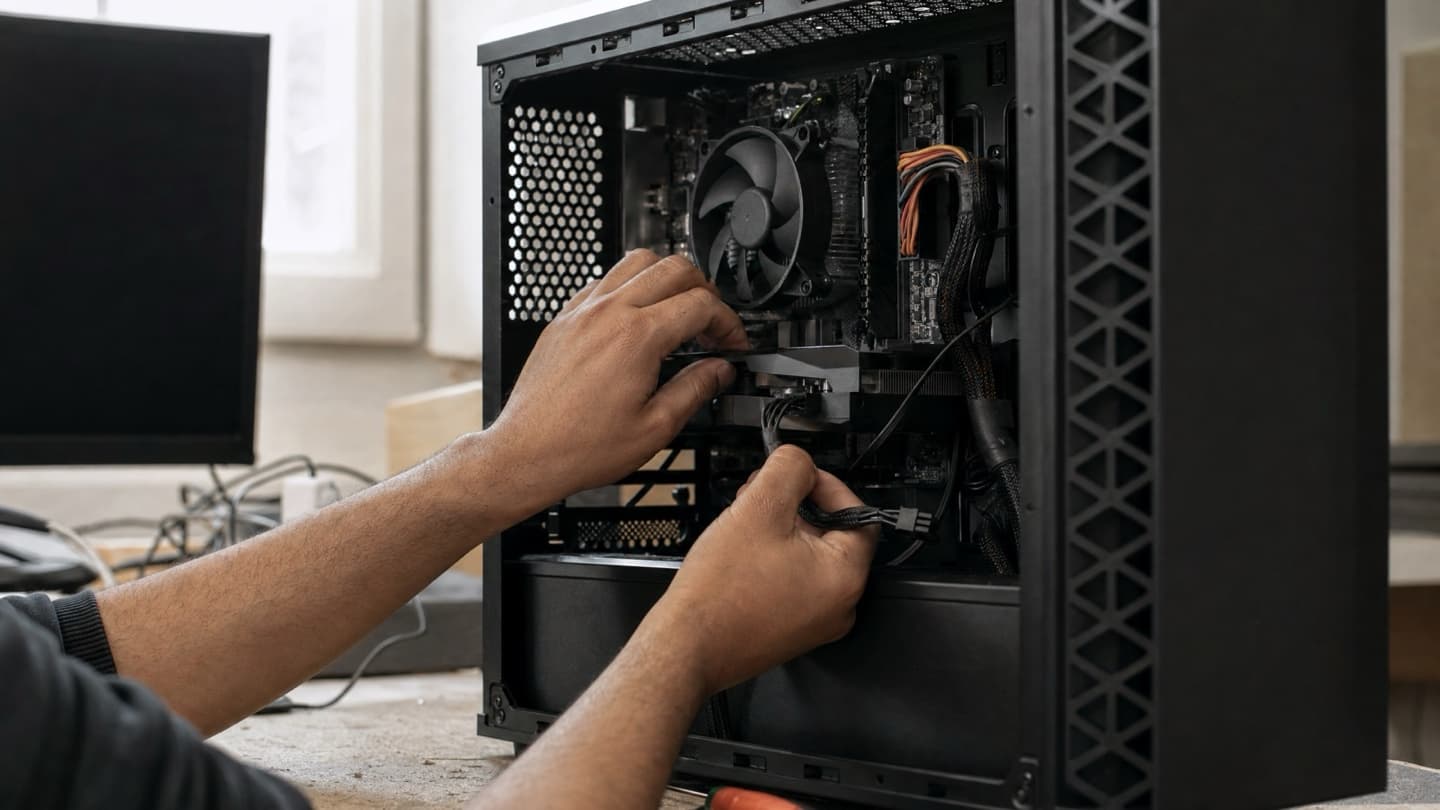
Windows 11 upgrade stuck, throwing a compatibility error, or missing drivers afterward? The upgrade usually goes fine. When it doesn't, it tends to fail in a few predictable ways: it won't start because your PC "isn't supported," it stalls partway through, or it finishes and then something's broken. Here's what each one means and how to fix it.
- "This PC can't run Windows 11" is usually TPM and Secure Boot switched off in the BIOS, not old hardware.
- A stuck install almost never loses your files. Windows rolls back with everything intact.
- Missing sound, Wi-Fi, or the wrong resolution after upgrading is just drivers that didn't carry over.
- A Windows 10 licence carries forward automatically, so don't buy a new key.
- Ten minutes of prep (back up, run PC Health Check, free up space) avoids most of the trouble.
"This PC can't run Windows 11"
This is the most common wall people hit, and it's almost always about TPM and Secure Boot, not your actual hardware being too old.
Windows 11 requires TPM 2.0 and Secure Boot turned on. Loads of PCs from the last several years have both, but they ship with them switched off in the BIOS. So the compatibility check fails even though the machine is perfectly capable.
Two things to check first:
- Run PC Health Check (Microsoft's free tool). It tells you exactly which requirement is failing instead of leaving you guessing.
- If it flags TPM or Secure Boot, restart and tap the BIOS key during boot (often Delete, F2, or F10, it flashes on screen).
- Look for TPM (sometimes called PTT on Intel or fTPM on AMD) and Secure Boot, switch them on, save, and exit.
Turning Secure Boot on can stop a PC booting if its drive was set up in the older Legacy/MBR mode. If the machine won't start after the change, go back into BIOS and turn Secure Boot off again, then get the disk converted before trying once more. This is an easy place to get stuck, and an easy one to hand off.
If PC Health Check flags the processor itself, that's a harder stop. Microsoft's supported CPU list is specific, and a genuinely old chip is a real limit. That's the point where "should I even upgrade this one" is worth asking, and we walked through that in the honest case for upgrading.
The install gets stuck
A progress bar frozen at 99%, or a machine stuck rebooting in a loop, is nerve-wracking but usually recoverable.
First, give it real time. Some stages genuinely sit at the same percentage for a long stretch, especially on a slower drive. If the drive light is still flickering, it's working. Leave it a good while before assuming it's dead.
If it's truly frozen with no disk activity for ages:
- A stable, wired internet connection helps. Half-downloaded update files are a classic cause of stalls.
- Free up space on the C: drive first. Upgrades need a fair bit of room, and a nearly-full drive is a common reason they stall or roll back.
- Unplug the extras. External drives, printers, hubs, controllers. Do the upgrade with just the essentials attached.
- If it fails and rolls back, Windows keeps a log. But honestly, at this point most people are better off using Microsoft's Installation Assistant or the Media Creation Tool for a clean, controlled run rather than fighting the automatic one.
When an in-place upgrade fails, Windows rolls back to your old version with everything intact. The scary screen is usually the recovery working, not your data disappearing.
Missing drivers after the upgrade
You upgraded, it finished, and now there's no sound, the Wi-Fi is gone, or a monitor is stuck at the wrong resolution. This is the most common post-upgrade headache, and it's just drivers that didn't carry over.
Work through it in order:
- Run Windows Update again, twice. It pulls a lot of drivers automatically, and the first pass often isn't the last. Reboot between rounds.
- For anything still broken, go to the maker's website (Dell, HP, Lenovo, ASUS, or the component's maker) and grab the Windows 11 driver for that exact model. This is the reliable route for Wi-Fi, graphics, and sound.
- Open Device Manager and look for yellow warning marks. Those are the devices Windows couldn't sort out. Right-click, Update driver, and if that fails, grab it manually per the step above.
Wi-Fi is the awkward one, because if the network driver is the thing that's missing, you can't download its replacement on that machine. Use your phone or another computer to fetch it and move it over on a USB stick.
Skip the third-party "driver updater" apps. They're unreliable and often bundle junk. Windows Update and the manufacturer's site cover everything you need.
App won't open or keeps crashing
An app that worked on Windows 10 and now won't launch is usually one of two things: it needs updating, or it needs a runtime it's missing.
- Update the app first. The current version is far more likely to be Windows 11-ready.
- If it's older software with no update, right-click it, Properties, Compatibility, and try running it in compatibility mode for Windows 10.
- Some older programs need the Visual C++ Redistributables or .NET installed. If it throws a "missing DLL" style error, that's usually what it's asking for.
Windows won't activate
If Windows shows as not activated after the upgrade, don't panic and don't buy a key. A valid Windows 10 licence carries forward to Windows 11 automatically.
Sign in with the same Microsoft account you used before. Then run the Activation troubleshooter (Settings, System, Activation). If your licence was tied to your Microsoft account, it usually sorts itself out within a day or two as things sync.
What to do before you upgrade (so none of this happens)
Most of the trouble above is avoidable with ten minutes of prep:
- Back up your files first. An upgrade rarely eats your data, but "rarely" isn't "never," and a copy on an external drive or the cloud costs you nothing. If a drive's already acting up, our data recovery service is the wrong thing to need after the fact.
- Run PC Health Check so you know it'll pass before you start.
- Update your current drivers and, if there's a BIOS update for your board, apply it.
- Make sure you've got space free on C: and a stable connection.
When to hand it off
Some of this gets fiddly fast, especially BIOS changes, disk conversion, and a machine that won't boot after a failed install. If you've got several things broken at once, or the PC won't start, or you just don't want to be the one editing BIOS settings, that's a fine time to call someone.
That's the sort of thing we do onsite, at your place, with your printers and network still working when we leave.
We'll get the install through, restore the missing drivers, and check everything works before we go. Diagnosis is free.